Leading a Discussion
If you’ve ever been part of a discussion where a lot of people need to get together to share ideas or make a decision, it’s probably gone like this: a moderator will stand at the front of a room, open the floor, and call on people as they see them. We call it the lighthouse model of discussion.
In theory, by running a discussion this way everyone who wants to speak will be able to, and the moderator will be able to ensure that discussions don’t get too sidetracked. In practice, the loudest and most confident voices tend to dominate, discussions can drag on, and arguments can easily break out when people disagree.

There are easier and more productive ways to run discussions. Here’s how.
Discussion Protocols
Discussion protocols are step-by-step instructions that can make difficult and important discussions easier, and can help break up the monotony and frustration of the typical large group free-for-all.
Check out section 4 of the Better Discussions guide for more information about how to use discussion protocols during your next discussion.
-
A foundational protocol that starts with a specific prompt or text as a way to jumpstart discussion and generate ideas. Participants reflect on an issue independently and then share their ideas with a partner.
-
A great way to help refine the scope of a discussion and establish priorities among a group. Participants rank items on a list and share their reasons in small groups.
-
An easy way to get an idea of where a group stands on an issue, participants stand in a corner designated as being in agreement or disagreement with a statement. It also works well as a warm-up or debriefing activity.
-
This protocol encourages active and empathetic listening among participants and works well when you’d like to encourage a wider range of participation, or when participants disagree about decision-making.
-
This is a silent activity that allows participants to respond to a prompt in writing. It can also be used as a way to brainstorm ideas when difficult decisions need to be made.
Activities
You can also add variety to discussions by having participants engage in activities that help them get to know each other and see past their disagreements. These can be used as icebreakers or to jumpstart discussion and encourage brainstorming.
Sharks vs. Bears: In this online interactive participants take a short quiz that categorizes them as either a shark or a bear. Participants then reflect on how easy it is to feel divided, even when those divisions are unimportant.
What do you want to read?: This dynamic online quiz has participants experience confirmation bias: our tendency to seek out and interpret information in ways that confirm what we already believe. A great activity to help participants who are stuck in their ways reflect on how they approach important issues.
Identity Chart: This handout gets people to reflect on what’s important about themselves and learn about others. A simple way to help participants get to know one another.
Iceberg Activity: Participants share their opinion about an issue, and then reflect on the beliefs, values, and experiences that led them to form that opinion. A useful activity for when participants have a hard time getting past disagreements.
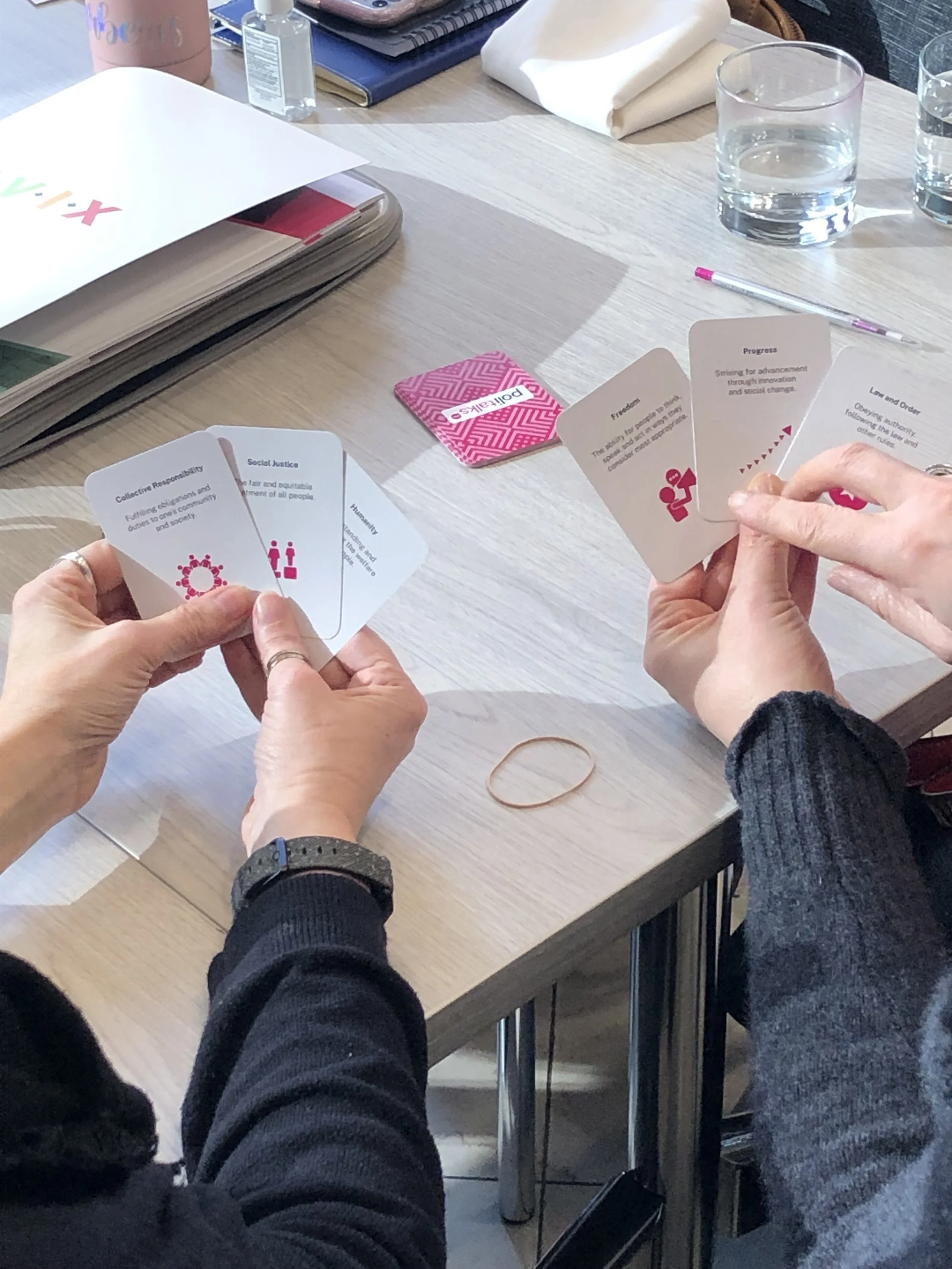
Value Cards: This card game gets participants to take on a new perspective and experience how their views can change when prioritizing different values. It can be played in groups of 2-5 players and takes approximately 20 minutes to complete.